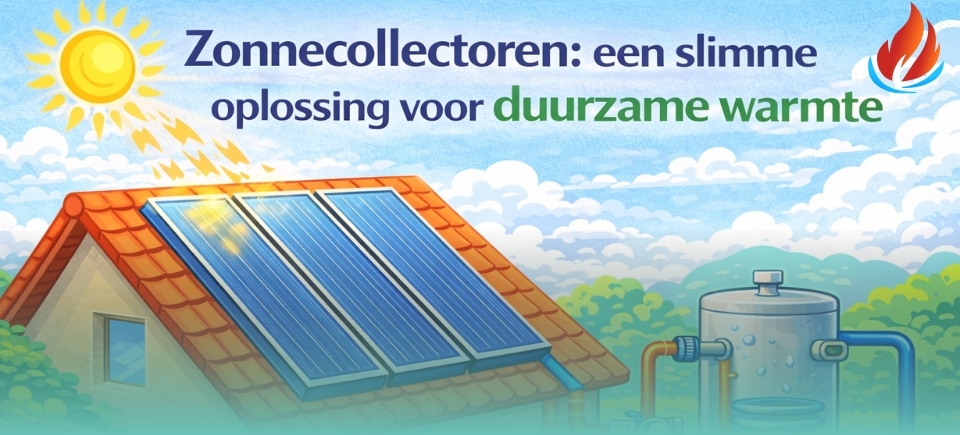
Solar collectors: still a smart solution for sustainable heat
The demand for sustainable heating systems continues to grow rapidly. Heat pumps, electric heating solutions and energy-efficient installations are gaining increasing attention. Nevertheless, solar thermal collectors remain a proven and highly efficient technology for generating renewable heat, especially for domestic hot water.
For installers and technical advisors, solar thermal systems remain an attractive option within modern heating installations. Especially when combined with heat pumps or hybrid systems, solar collectors can significantly reduce energy consumption and improve system efficiency.
What is a solar collector and how does it work?
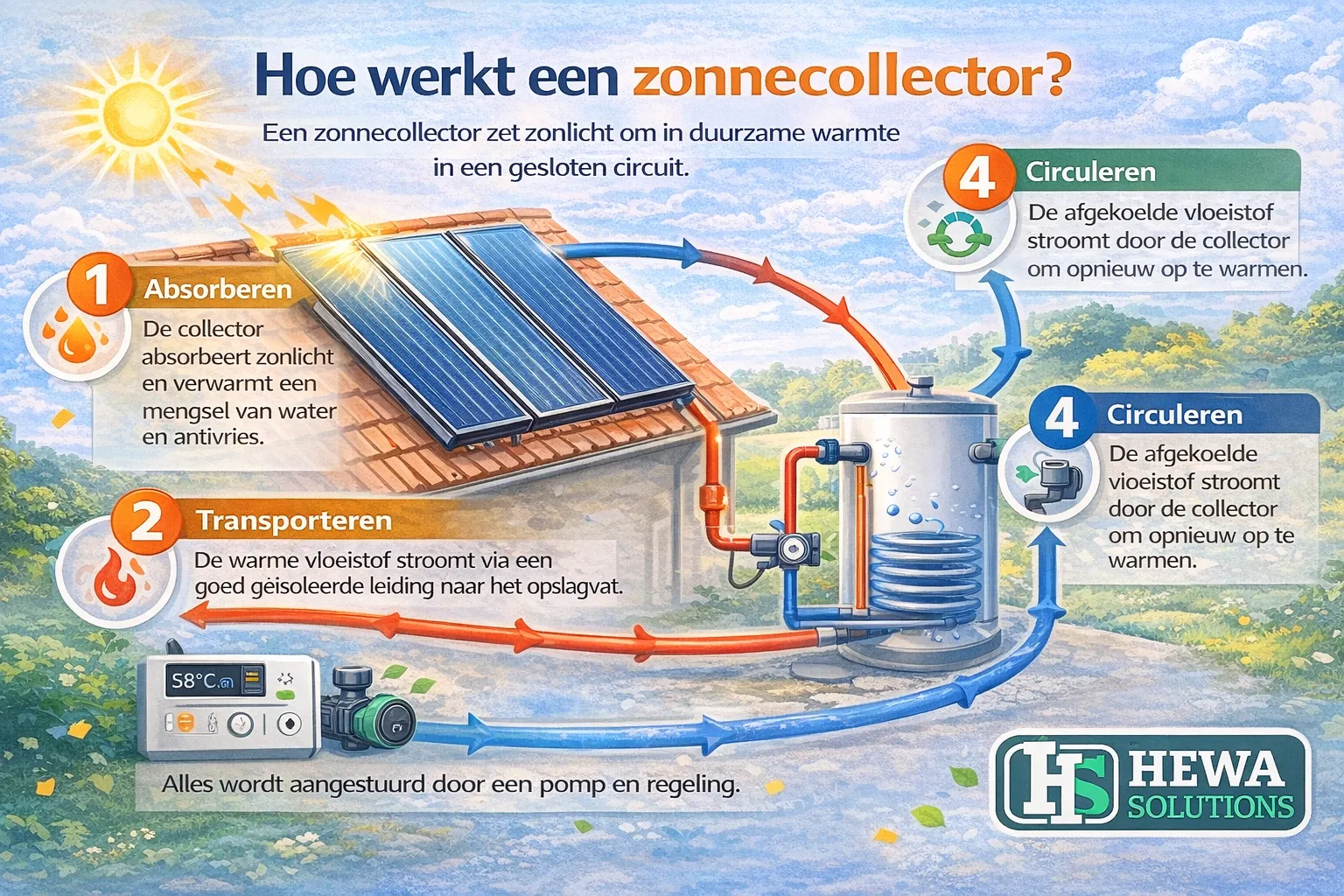
A solar collector converts sunlight into heat. The collector absorbs solar radiation and transfers this heat to a fluid circulating in a closed loop. This fluid usually consists of a mixture of water and antifreeze.
The heated fluid transports the energy to a storage tank or boiler. Inside the tank, a heat exchanger transfers the heat to the domestic hot water. When the temperature in the collector is higher than in the tank, a pump activates and circulation begins.
Thanks to this efficient use of solar energy, a solar thermal system can cover a significant part of the annual domestic hot water demand.
Can a solar boiler support space heating?
Although solar collectors are primarily used for hot water production, they can also contribute to space heating under specific conditions. This is often applied in buildings with low temperature heating systems such as underfloor heating.
For this application a larger collector surface and a buffer tank with multiple heat exchangers are usually required. A smart control system ensures that the generated heat is optimally distributed between domestic hot water and space heating.
In practice, this solution is mainly used in hybrid heating systems.
Is a solar boiler still interesting today?
Despite the rapid growth of heat pumps, solar boilers remain a valuable investment. When combined with a heat pump, they create a highly efficient heating system.
During the summer months, solar collectors can often supply almost all domestic hot water. This reduces the workload of the heat pump, lowering electricity consumption and extending the lifespan of the system.
Solar energy can also help meet modern energy performance requirements in new buildings.
What is the lifespan of a solar boiler?
A high-quality solar thermal system typically lasts between 20 and 25 years. Because the system contains relatively few moving parts, maintenance requirements are limited.
Maintenance mainly involves checking the heat transfer fluid and inspecting the circulation pump and control system. With proper installation and correct system sizing, solar collectors can operate reliably for decades.
What does a solar boiler cost?
The cost of a solar thermal installation depends on the collector type, the size of the storage tank and the complexity of the installation.
For a typical residential property, the investment usually ranges between €3,000 and €7,500 including installation after subsidies. Larger systems for commercial buildings or apartment complexes will naturally have higher costs.
For installations with higher heat demand, vacuum tube collectors may be a better option because they produce more heat per square meter.
Are there subsidies for solar collectors?
Solar thermal systems are often eligible for government incentives or sustainability subsidies depending on the country and installation type.
The available subsidy usually depends on the collector type, storage capacity and system performance. Combining solar collectors with heat pumps can further increase the financial benefits.
Flat plate collector or vacuum tube collector?
Two common types of solar collectors are flat plate collectors and vacuum tube collectors.
Flat plate collectors consist of an absorber plate with glass covering and insulation. They are robust, cost-effective and easy to integrate into roof structures.
Vacuum tube collectors use individual glass tubes with vacuum insulation, which significantly reduces heat loss and increases efficiency per square meter. This technology is especially useful where roof space is limited or heat demand is higher.
Conclusion
Solar collectors remain an important technology in modern sustainable heating systems. Their high efficiency, long lifespan and low maintenance requirements make them a valuable addition to energy-efficient installations.
For installers, solar thermal systems provide opportunities to create efficient hybrid heating systems. By combining solar collectors with heat pumps and buffer tanks, highly efficient and future-proof heating solutions can be realised.
At Hewa we support installers with technical advice, documentation and reliable components for sustainable heating installations.