Filters
 Loading…
Refrigerant pipe and coupling
Refrigerant pipes and fittings are used for the refrigerant-side connection between the air conditioner indoor unit and outdoor unit. The correct pipe diameter, insulation and connection are important for safe, leak-free and efficient operation of split and multi split air conditioning systems.
At Hewa, you will find refrigerant pipes and fittings for air conditioning installations in homes, offices, retail spaces, workshops and project-based applications. When selecting the right materials, check pipe size, wall thickness, insulation thickness, flare connection, pipe length, refrigerant type, bending radius and compatibility with the indoor and outdoor unit.
Brands

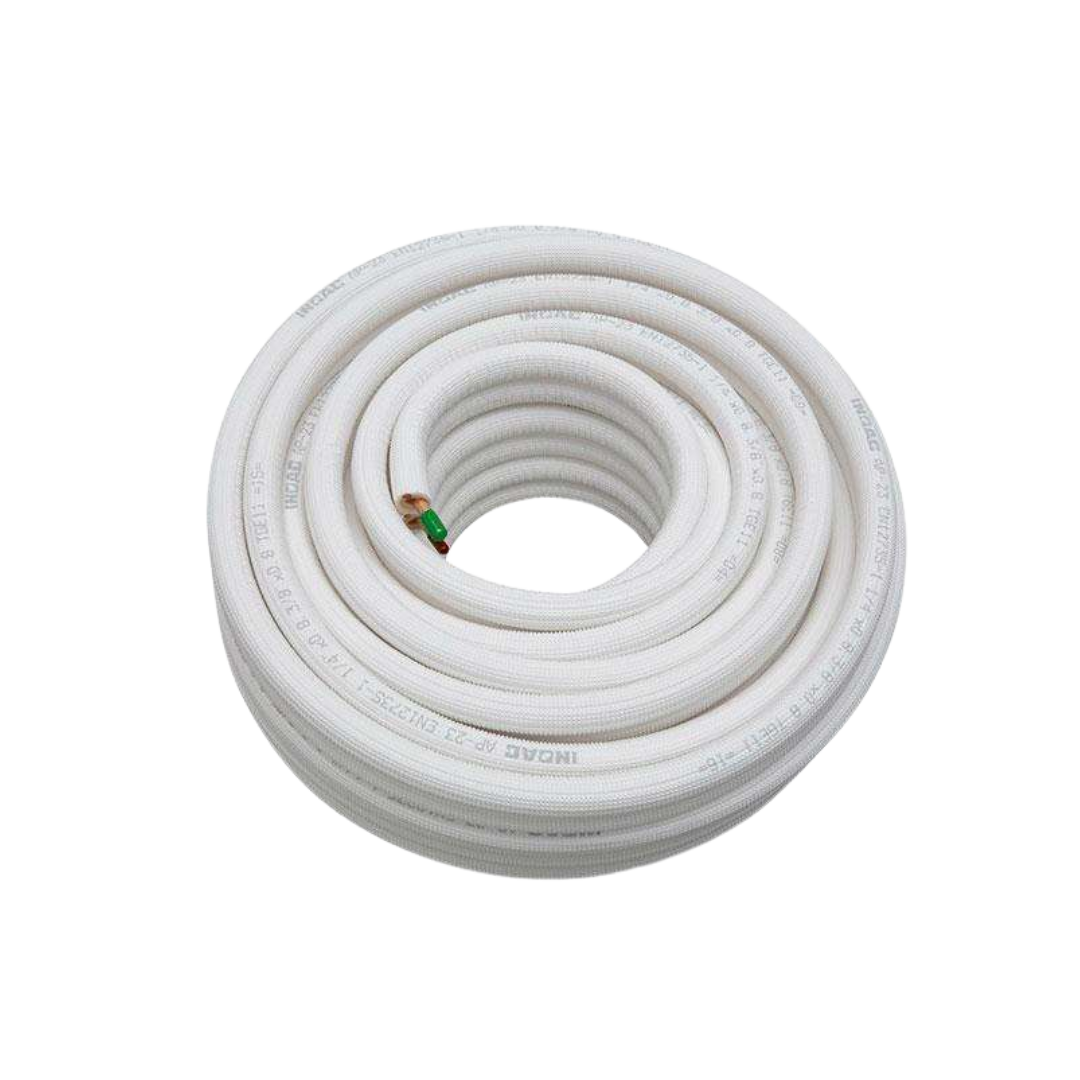
INOAC CIN-2232-000 - Insulated Copper Pipe 3/8” + 5/8” (20 m)
Item no. 482232EAN 5414618780745
Price excl. VAT€ 310,26Price incl. VAT€ 375,42
On backorder
Added
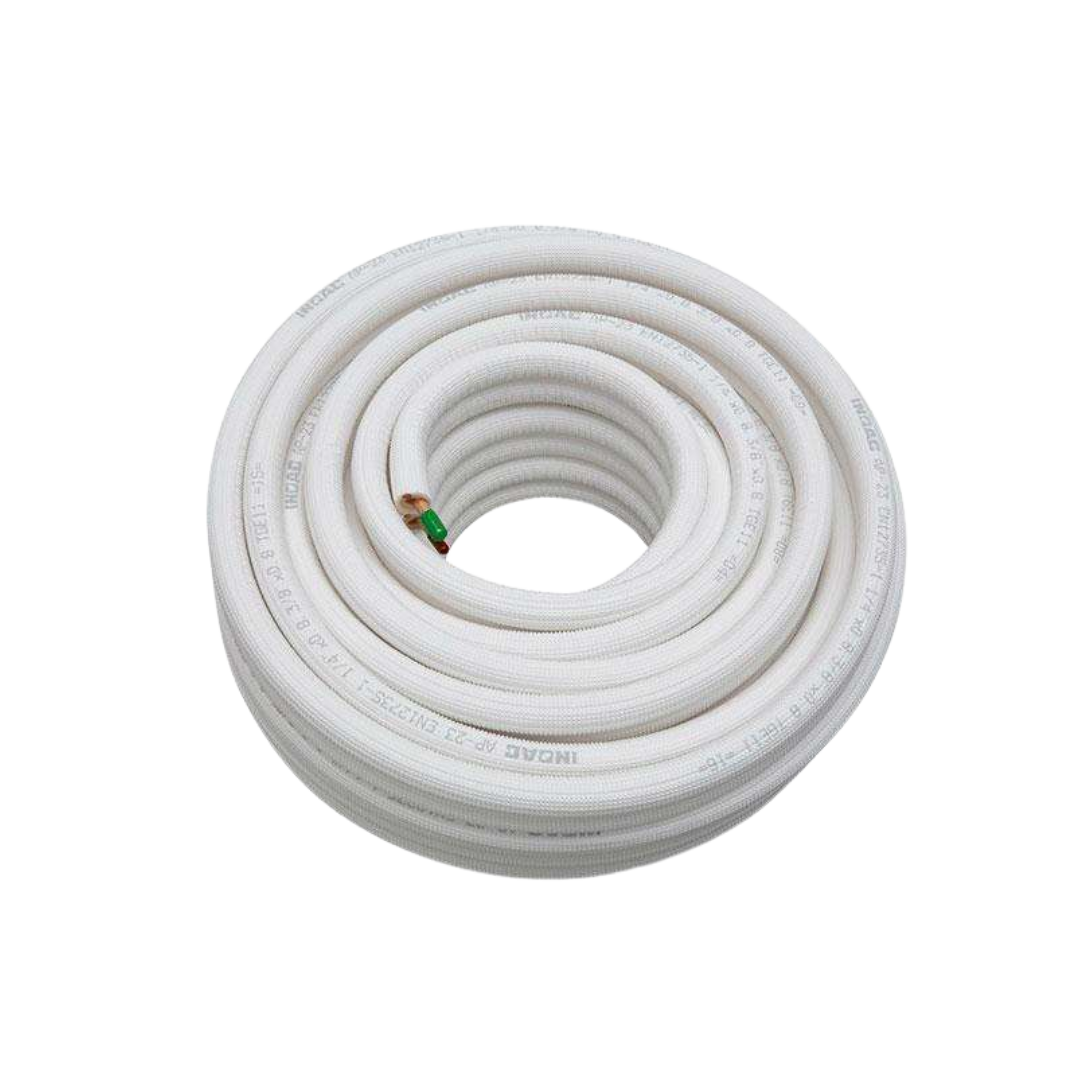
INOAC CIN-2203-000 - Insulated Copper Pipe 1/4” + 3/8” (30 m)
Item no. 482203EAN 5414618780691
Price excl. VAT€ 255,88Price incl. VAT€ 309,62
Low stock
Added
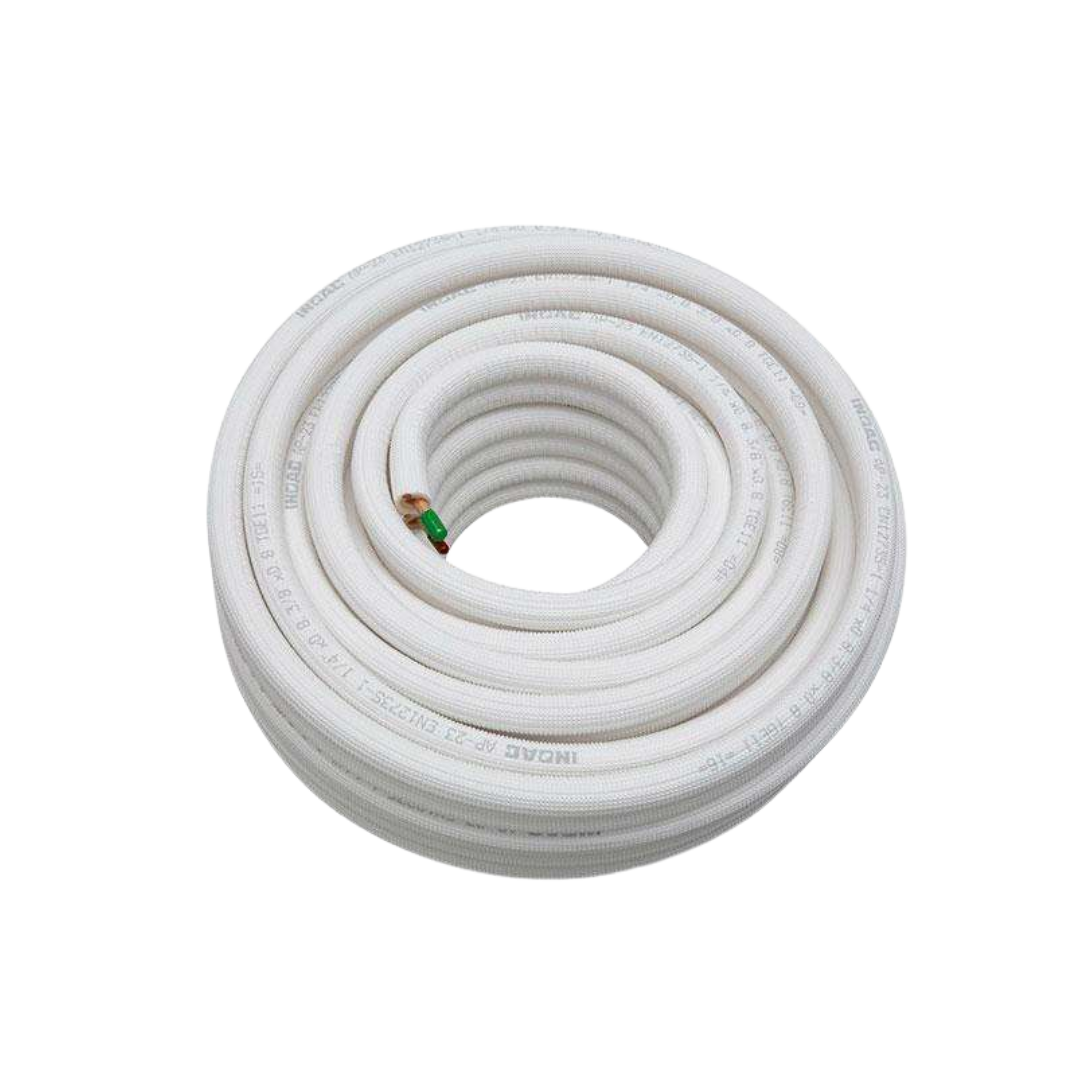
INOAC CIN-2213-000 - Insulated Copper Pipe 1/4” + 1/2” (30 m)
Item no. 482213EAN 5414618780714
Price excl. VAT€ 287,93Price incl. VAT€ 348,40
On backorder
Added
Selecting refrigerant pipe and fittings
Refrigerant pipes and fittings form the technical connection between the air conditioner indoor unit and outdoor unit. Refrigerant flows through these pipes between both unit sections, allowing the air conditioner to cool and heat. The correct pipe size, insulation and connection type are therefore essential for efficiency, operational reliability and neat installation.
The right choice depends on the air conditioning system, connection size of the indoor and outdoor unit, total pipe length, height difference, refrigerant type and the prescribed technical documentation. For the complete installation context, also review air conditioning installation material, trunking for air conditioning finishing and air conditioning accessories.
Important when choosing refrigerant pipes and fittings
- Check the prescribed pipe diameter of the indoor unit and outdoor unit
- Check pipe length, height difference and maximum permitted route length
- Select insulated refrigerant pipe with suitable insulation thickness for air conditioning use
- Check flare connections, nuts, fittings and leak-tight fit
- Prevent kinks by respecting the minimum bending radius
- Protect the pipe route with trunking or suitable mechanical finishing
- Have refrigerant connection, evacuation and commissioning carried out by a qualified F-gas technician
Pipe diameter, insulation and flare connection
Refrigerant pipes for air conditioning installations should not be selected randomly. Pipe diameter must match the unit specifications. An incorrect diameter can affect refrigerant flow, oil return, capacity and compressor service life. Pipe length and height difference between indoor and outdoor unit must also remain within the permitted limits.
Insulation around the refrigerant pipe is important to reduce condensation and energy loss. Especially during cooling, insufficiently insulated pipework can cause moisture issues, dripping or damage to the finish. Fittings and flare connections must be clean, correctly formed and tightened to the correct torque. Always check the technical manual of the air conditioning system before connecting the pipework.
Frequently asked questions about refrigerant pipes and fittings
What is refrigerant pipe used for in an air conditioner?
Refrigerant pipe is used to transport refrigerant between the air conditioner indoor unit and outdoor unit. The pipe enables cooling and heating within a split or multi split air conditioning system.
Which refrigerant pipe do I need?
The correct refrigerant pipe depends on brand, model, pipe diameter, refrigerant type, pipe length and the technical specifications of the indoor and outdoor unit. Always check the installation manual.
Why must refrigerant pipe be insulated?
Insulation reduces energy loss and helps prevent condensation on the pipe. This is important for efficiency, safety, finishing and preventing moisture issues around the pipe route.
What is a flare connection?
A flare connection is a refrigerant-side connection where the end of the copper pipe is flared and secured to the air conditioner connection using a flare nut.
Who may connect refrigerant pipe?
Connecting, evacuating and commissioning refrigerant pipes on split air conditioners must be carried out by a qualified F-gas technician. Leak tightness and technical documentation must also be checked correctly.