Filters
 Loading…
Contact thermostat
A contact thermostat is used to measure the temperature of a pipe, manifold, buffer tank, heat exchanger or technical surface. The thermostat switches based on the measured temperature and is often used for pump control, protection or additional regulation within heating systems.
At Hewa, you will find contact thermostats for installation, service work, renovation and technical replacement. When selecting the right version, check temperature range, switching function, mounting method, internal or external adjustment, connection voltage and suitability for the installation.
Brands


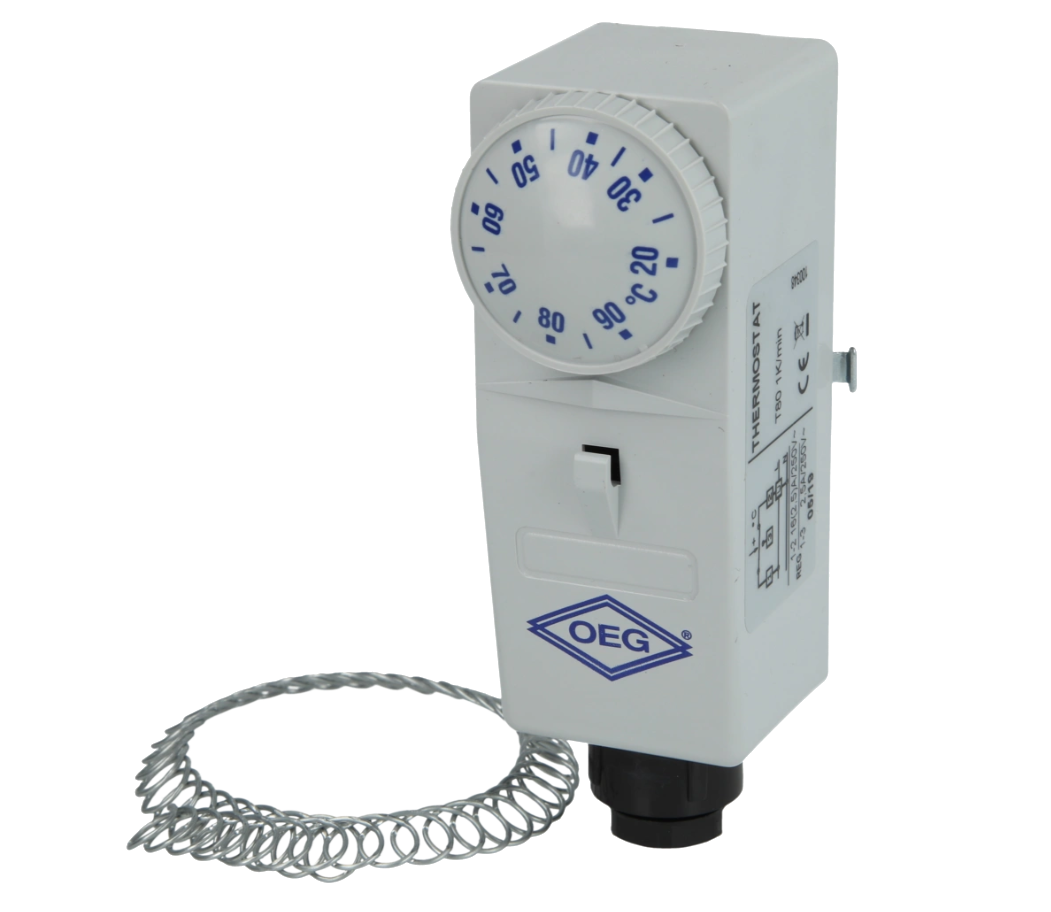
OEG 211208050 - Pipe thermostat 20 - 90 °C with external control
Item no. 348050EAN 8021495040366
Price excl. VAT€ 15,69Price incl. VAT€ 18,99
In stock
Added
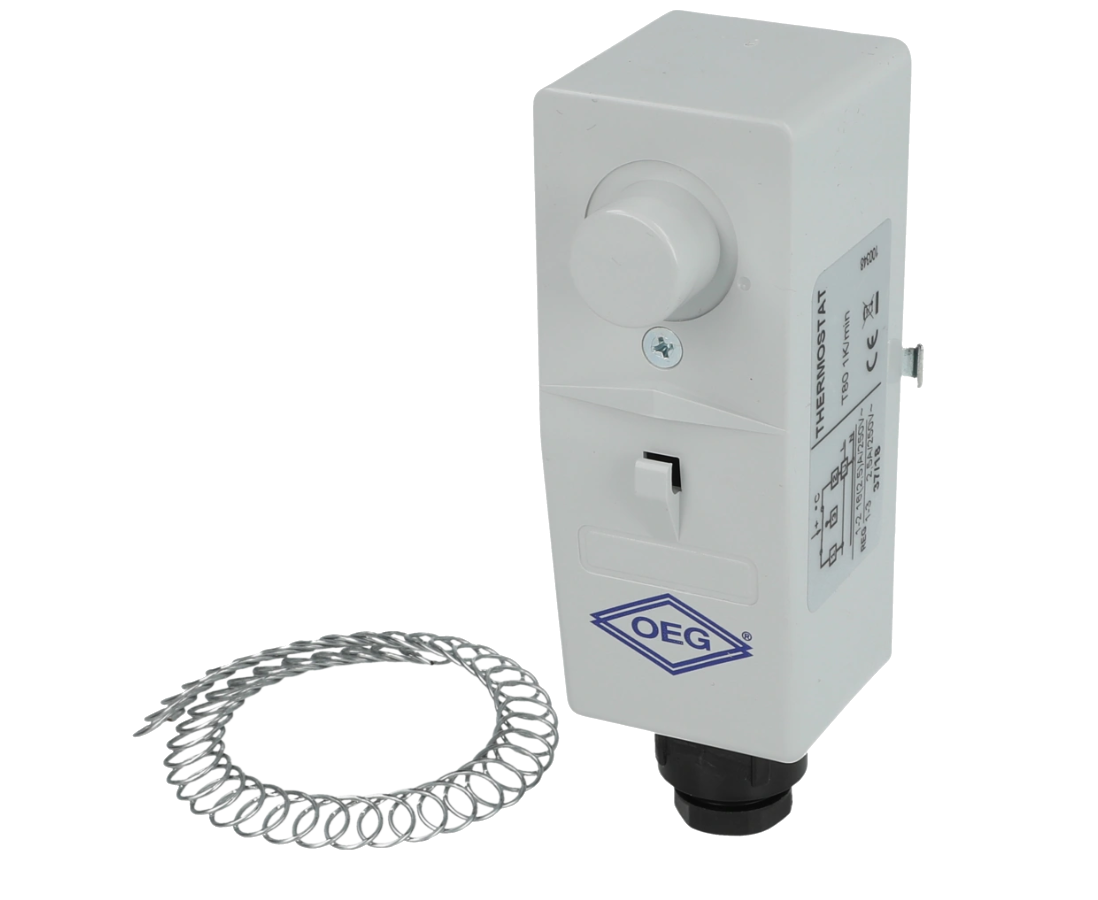
OEG 211208060 - Pipe thermostat 20 - 90 °C with internal adjustment
Item no. 348060EAN 8021495040373
Price excl. VAT€ 14,87Price incl. VAT€ 17,99
In stock
Added
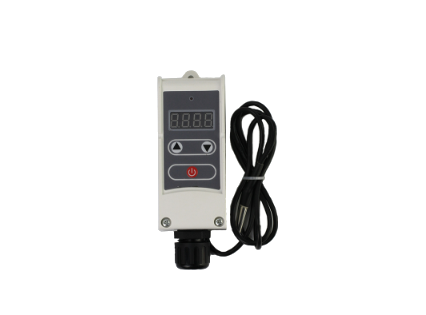
TANGER DSA681B(A) - Pipe Thermostat
Item no. 566810EAN 8721225900334
Price excl. VAT€ 19,00Price incl. VAT€ 22,99
In stock
Added
Selecting a contact thermostat
A contact thermostat measures temperature directly on a pipe, manifold or technical surface. This makes this type of thermostat especially suitable when the temperature of a system component is more important than the room temperature. Typical uses include switching a pump, monitoring a flow pipe or supporting a technical safety function.
When selecting a contact thermostat, temperature range, switching function, mounting method and adjustment option are important. A version with a range such as 20 to 90 °C can be widely used in heating systems, but must always be matched to the required switching value, pipe temperature and electrical connection.
Important when choosing contact thermostats
- Check the temperature range and required switching value
- Choose internal or external adjustment based on accessibility and application
- Check switching function, connection voltage and maximum switching capacity
- Mount the thermostat on a suitable pipe or technical surface
- Ensure good contact between the thermostat and measuring surface
- Avoid mounting points with inaccurate or delayed temperature measurement
- Have electrical connection and inspection carried out by a qualified installer
Contact control within thermostat solutions
Contact thermostats are used when temperature must be measured directly on a pipe or component. For control based on room temperature, a simple thermostat for basic control may be more suitable. When wireless operation or digital settings are required, a smart thermostat for heating and cooling is often a better match. For multiple rooms or groups, zone control for heating zones provides more control per room.
A contact thermostat must be installed correctly to switch reliably. If contact with the pipe is insufficient or the thermostat is installed at the wrong measuring point, the system may switch too early, too late or irregularly.
Frequently asked questions about contact thermostats
What is a contact thermostat used for?
A contact thermostat is used to measure the temperature of a pipe, manifold or technical surface. Based on that temperature, the thermostat can switch a pump, valve, appliance or control component.
What is the difference between a contact thermostat and a room thermostat?
A room thermostat measures room temperature. A contact thermostat measures the temperature of a pipe or surface and is mainly used for technical switching or safety functions.
Where should a contact thermostat be installed?
A contact thermostat must be mounted on a suitable measuring point, such as a pipe or manifold where the temperature is representative of the required switching function. Good contact with the surface is important.
What does internal or external adjustment mean?
With internal adjustment, the switching value is usually set inside the housing. With external adjustment, the setting is often easier to access from the outside of the thermostat.
Who should connect a contact thermostat?
The electrical connection must be carried out correctly and safely. Installation, connection and inspection should therefore preferably be performed by a qualified installer.