Filters
 Loading…
Junction boxes
Junction boxes are used to safely connect, branch and protect electrical wiring within fixed and technical installations.
The correct junction box depends on application, protection rating, number of entries, gland size, cable type and mounting environment. Where required, combine junction boxes with power cables, isolator switches and other products in electrical.
Brands

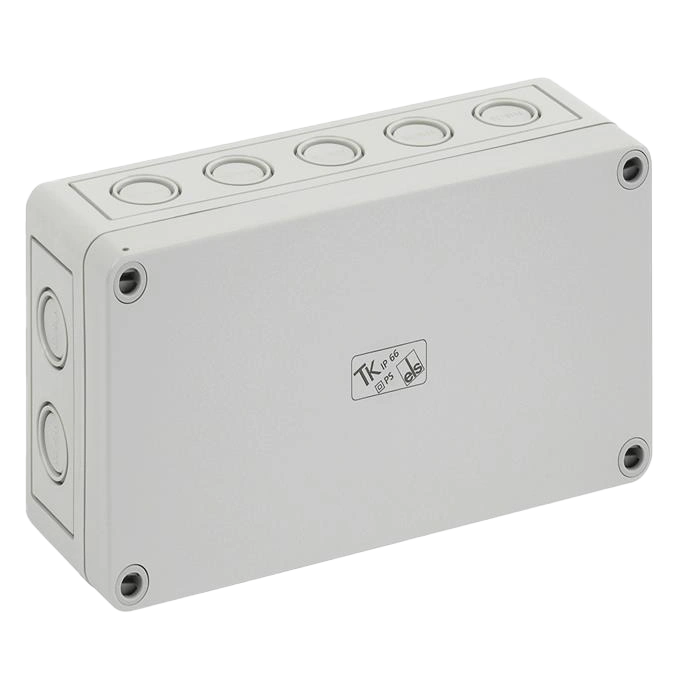
Junction boxes for safe electrical connections
Junction boxes are used to safely connect, branch and protect electrical wiring. They are essential in fixed installations, technical rooms, workshops, machine connections and projects where cables must be processed clearly and remain accessible for service.
The correct junction box is selected based on protection rating, number of entries, cable diameter, gland size, mounting position and the environment in which the electrical connection is installed. For installers, the combination with cable type, strain relief and sealing is especially important.
For branching and connecting cables
A junction box makes it possible to connect or branch power cables clearly. This is important for extensions, service work and technical installations where multiple connection points come together.
Protection against dust, moisture and load
Depending on the version, a junction box can provide protection against moisture, dust and mechanical load. Always check the IP rating, sheath sealing and mounting environment.
For installers and service technicians
Junction boxes are used in new-build, renovation, replacement, fault solving and project-based mounting. A correctly selected junction box makes the installation safer, clearer and easier to service.
Important points when choosing junction boxes
- Check the protection rating, especially for use in damp, dusty or technical rooms.
- Pay attention to the number of entries, knock-out ports, gland sizes and suitable cable diameters.
- Match the junction box to the cable type, such as fixed power cable, flexible cable or technical connection cable.
- Use suitable glands, strain relief and seals for a safe and durable connection.
- Have electrical connections checked according to applicable regulations by a skilled technician.
Applications for junction boxes in electrical installations
Junction boxes are used for supply lines, branches, switching circuits, technical equipment, heat pumps, air conditioning systems, workshop installations and general electrical work. For the wiring itself, power cables are important, while isolator switches and safety plugs are often used for safe operation and maintenance.
For complete electrical preparation, junction boxes can also be combined with products from electrical and broader installation material. This creates a clear installation in which cable routing, connection, protection and serviceability are properly aligned.
Technical rooms
Suitable for safely connecting and branching cables in heat pumps, heating systems, switching circuits and technical equipment.
Workshops and utility
Practical for project-based mounting, machine connections, supply lines and situations where cables must be processed robustly.
Service and renovation
Useful for replacing, extending or clearly repairing existing electrical connections in homes and commercial spaces.
Technical points for mounting and connection
With junction boxes, correct cable entry, strain relief, sealing, core assignment, earthing and sufficient working space inside the box are important. A junction box that is too small, an incorrect gland size or insufficient sealing can lead to heat build-up, moisture ingress, loose connections or unsafe situations.
Always check whether the junction box is suitable for the application, voltage, cable diameter, mounting position and environment. Electrical work must be carried out safely and according to applicable regulations. Fixed installations should be connected, modified and checked by a skilled technician.
Frequently asked questions about junction boxes
What are junction boxes used for?
Junction boxes are used to safely connect, branch or protect electrical cables. They create a clear connection point within fixed and technical installations.
Which junction box do I need?
That depends on the application, protection rating, cable diameter, number of entries, mounting environment, voltage and the way the cables are connected.
Why is the IP rating important for junction boxes?
The IP rating indicates how well the junction box is protected against dust and moisture. This is especially important in technical rooms, outdoor setups or damp environments.
Which parts are often used with a junction box?
Junction boxes are often used with cable glands, seals, strain relief, power cables, isolator switches and safety plugs, depending on the installation.
Can I connect a junction box myself?
Electrical connections must be carried out safely and according to applicable regulations. Fixed installations and modifications should be checked or performed by a skilled technician.
Need junction boxes for your installation?
Are you looking for junction boxes for electrical work, technical installations, service work or project-based mounting? Contact Hewa for advice on application, protection rating, cable entry and matching electrical components.