Filters
 Loading…
Hot air wood furnace
A wood-fired warm air boiler is used for direct heat output in large spaces such as workshops, commercial halls, warehouses, agricultural buildings and technical rooms. In this category, you will find Fabbri wood-fired warm air boilers in various capacities for applications where fast and powerful space heating is required.
When choosing a warm air boiler, output, room volume, air distribution, flue gas extraction, wood storage, installation space and model are important factors. With Fabbri models, also note the difference between S.V. and C.V. The S.V. is a version without a flue gas fan and operates using natural chimney draught, whilst C.V. is fitted with a flue gas/chimney fan to assist the draught in the flue.
Brands

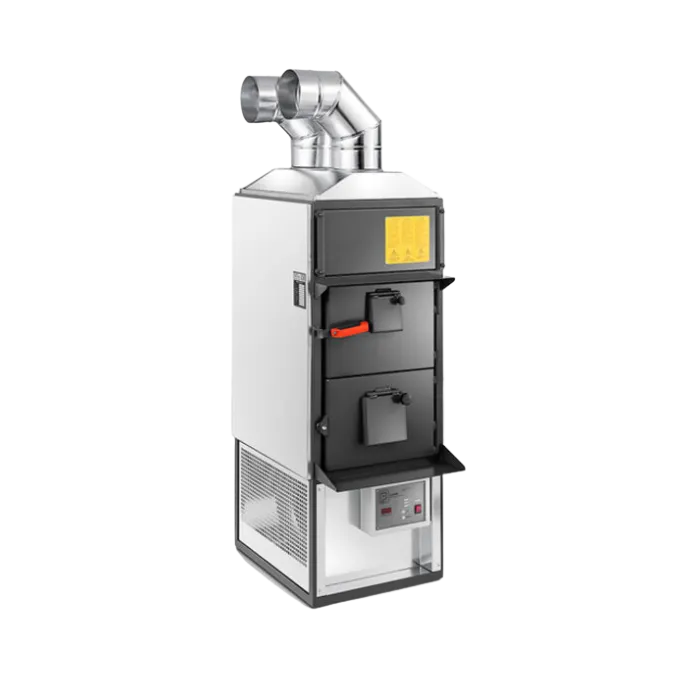
Fabbri F 28 - Warm Air Wood Boiler (28 kW)
Item no. 351028
Price excl. VAT€ 2.900,00Price incl. VAT€ 3.509,00
Low stock
Added
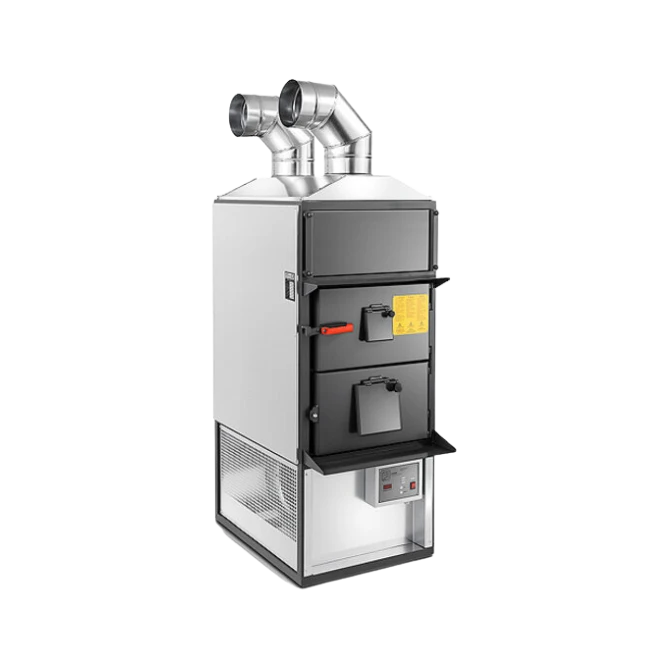
Fabbri F 55 S.V. - Warm Air Wood Boiler (55 kW)
Item no. 353055EAN 4260580271732
Price excl. VAT€ 3.400,00Price incl. VAT€ 4.114,00
On backorder
Added
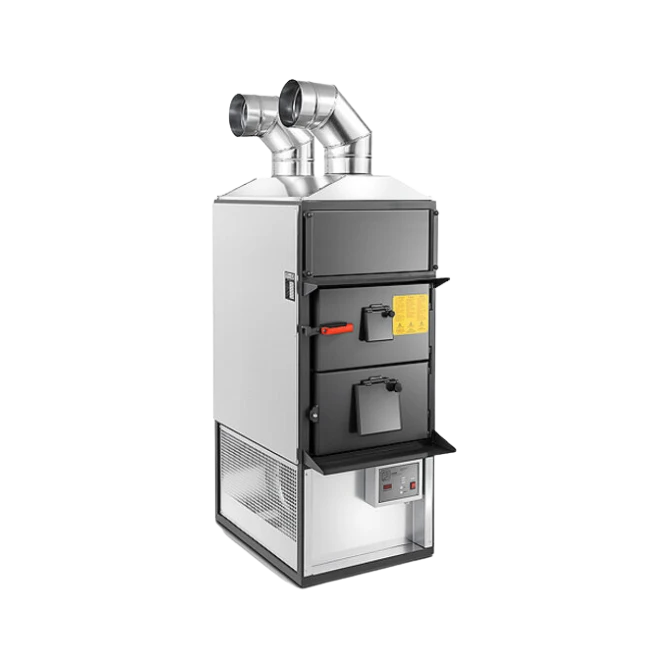
Fabbri F 55 C.V. - Warm Air Wood Boiler (55 kW)
Item no. 352055EAN 4260580271733
Price excl. VAT€ 4.000,00Price incl. VAT€ 4.840,00
On backorder
Added
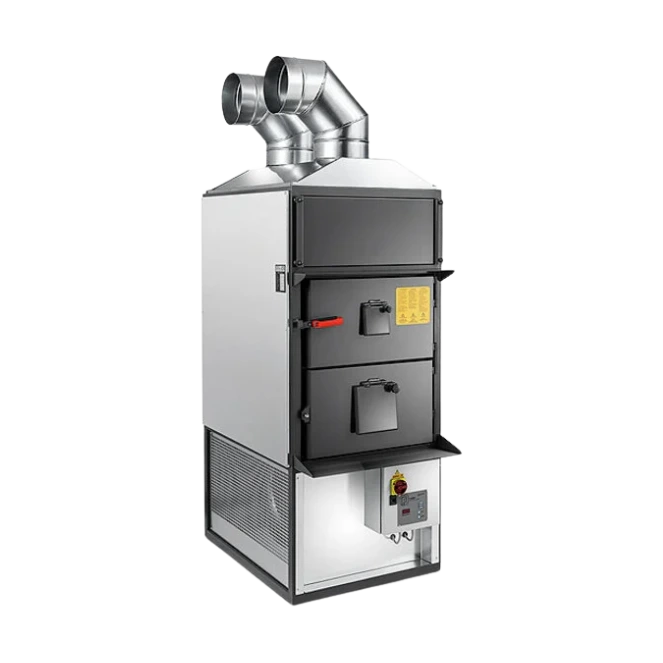
Fabbri F 85 S.V. - Warm Air Wood Boiler (85 kW)
Item no. 353085EAN 8721225900655
Price excl. VAT€ 4.100,00Price incl. VAT€ 4.961,00
On backorder
Added
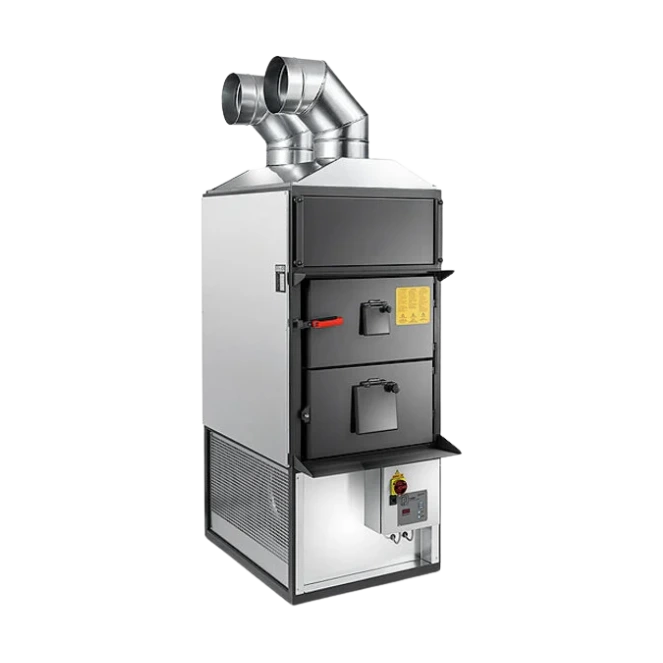
Fabbri F 85 C.V. - Warm Air Wood Boiler (85 kW)
Item no. 352085EAN 4260580271757
Price excl. VAT€ 5.100,00Price incl. VAT€ 6.171,00
On backorder
Added
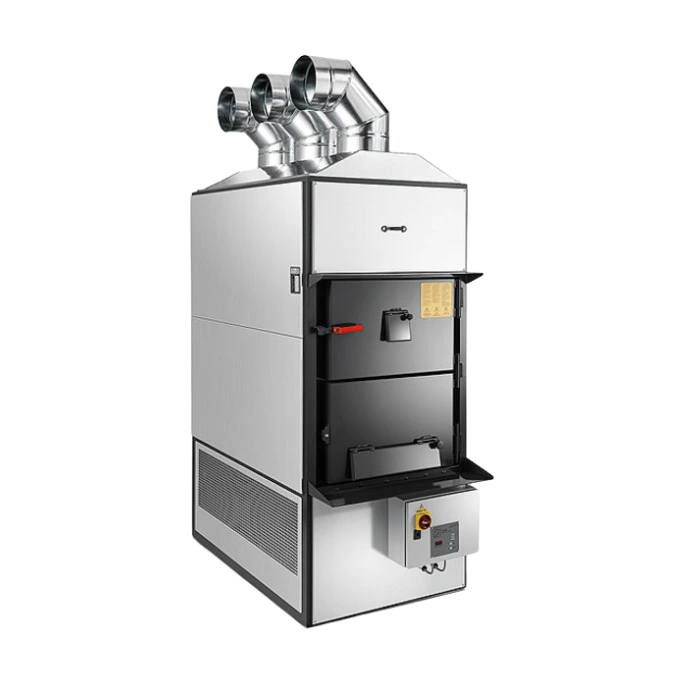
Fabbri F 120 - Warm Air Wood Boiler (120 kW)
Item no. 351120EAN 4260580271764
Price excl. VAT€ 7.000,00Price incl. VAT€ 8.470,00
On backorder
Added
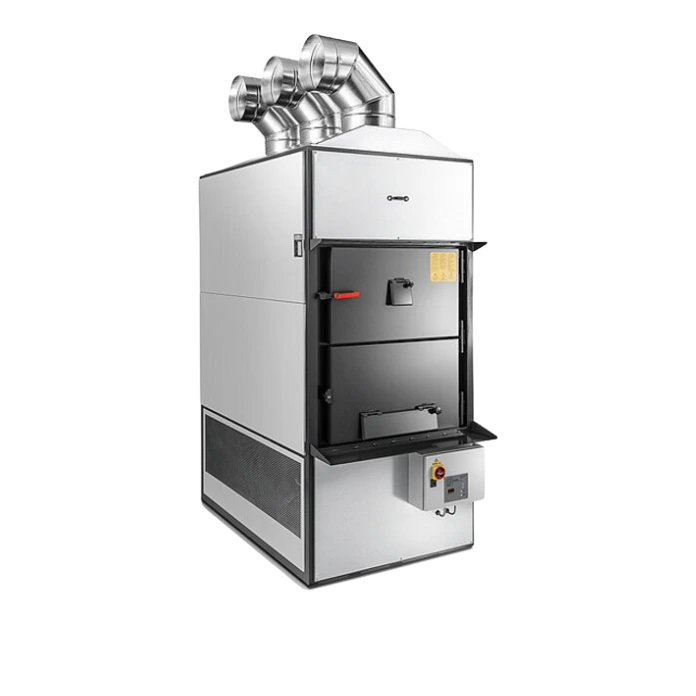
Fabbri F 240 - Warm Air Wood Boiler (240 kW)
Item no. 351240EAN 4260580271771
Price excl. VAT€ 9.000,00Price incl. VAT€ 10.890,00
On backorder
Added
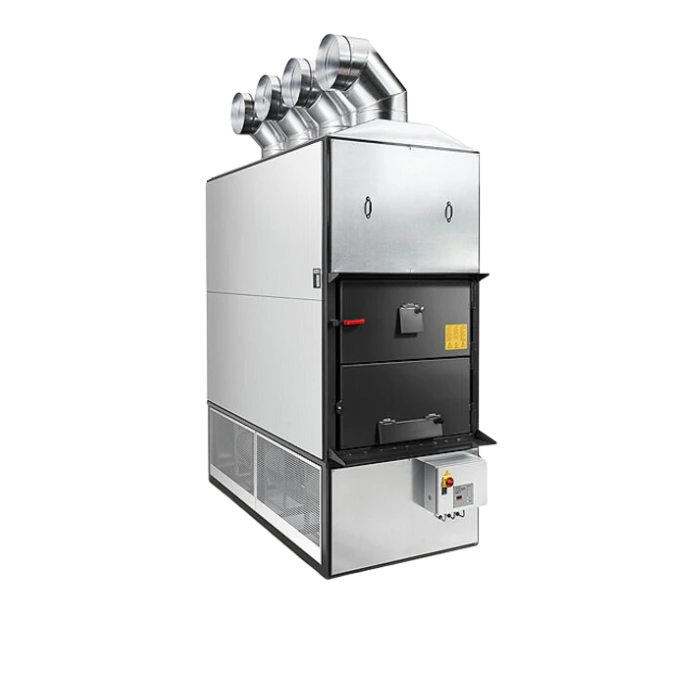
Fabbri F 350 - Warm Air Wood Boiler (350 kW)
Item no. 351350EAN 4260580271788
Price excl. VAT€ 12.500,00Price incl. VAT€ 15.125,00
On backorder
Added
Choosing a wood-fired warm air boiler
A wood-fired warm air boiler is suitable for spaces where a large amount of heat is required quickly, without necessarily needing a complete water-based central heating system. The boiler heats air and blows it into the room, allowing workshops, halls, warehouses and agricultural buildings to be heated directly.
When choosing a unit, heating capacity, room volume, insulation, air distribution, flue gas discharge and version are important. For additional solutions, also view wood boilers for central heating and wood boiler accessories for installation and service.
Important for warm air boilers
- Select capacity based on room volume, insulation and desired heating speed
- Check flue gas discharge, chimney connection and air supply
- With Fabbri, note the difference between S.V. without flue gas fan and C.V. with flue gas fan
- Consider wood storage, loading space, cleaning and ash removal
- Check whether direct warm air heating suits the room and application
- Have the installation assessed by a qualified installer
Difference between S.V. and C.V. in Fabbri warm air boilers
With Fabbri warm air boilers, the difference between S.V. and C.V. mainly concerns flue gas discharge and chimney draught support. S.V. refers to a version without a flue gas fan or chimney fan. This version works with natural draught through the chimney.
C.V. refers to a version with a flue gas fan, also known as a chimney assist fan. This fan supports draught in the flue gas duct and helps create negative pressure in the chimney. This can be important when the flue system needs additional support or when the project situation requires it.
The correct choice between S.V. and C.V. depends on the chimney setup, flue gas route, draught conditions, boiler placement and technical assessment of the installation. Always check per project which version is suitable.
Frequently asked questions about warm air boilers
What is a warm air boiler?
A warm air boiler is a heating unit that heats air directly and blows this warm air into the room. With wood-fired warm air boilers, wood is used as fuel for direct space heating.
When is a warm air boiler suitable?
A warm air boiler is suitable for large spaces where direct heat is required, such as workshops, warehouses, commercial halls, agricultural buildings and technical rooms. The right choice depends on room volume, insulation, flue gas discharge and required heat distribution.
What is the difference between S.V. and C.V.?
S.V. is a version without a flue gas fan or chimney fan and works with natural chimney draught. C.V. is a version with a flue gas/chimney assist fan that supports draught in the flue gas duct and helps create negative pressure in the chimney.
What is the difference between a wood boiler and a warm air boiler?
A wood boiler heats water for a central heating system and is often combined with a buffer tank. A warm air boiler heats air directly and blows it into the room, without always requiring a water-based heating system.
What should an installer check during installation?
An installer should check capacity, clearance around the boiler, flue gas discharge, chimney draught, air distribution, fuel storage, cleaning, safety distances and the correct version for the project situation.