Filters
 Loading…
Safety switches
Wartungsschalter werden eingesetzt, um elektrische Anlagen, Maschinen und technische Komponenten bei Wartung, Service oder in Notsituationen sicher spannungsfrei schalten zu können.
Der richtige Wartungsschalter hängt von Polzahl, Stromstärke, Spannung, Montageumgebung, Schutzart und der Anwendung innerhalb der Elektroinstallation ab.
Brands

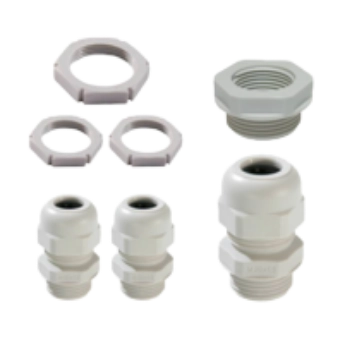
401180081 - EMAT - Extended Gland Set for Work Switch (M12/M20)
Item no. 158512EAN 8720143955082
Price excl. VAT€ 4,50Price incl. VAT€ 5,45
In stock
Added
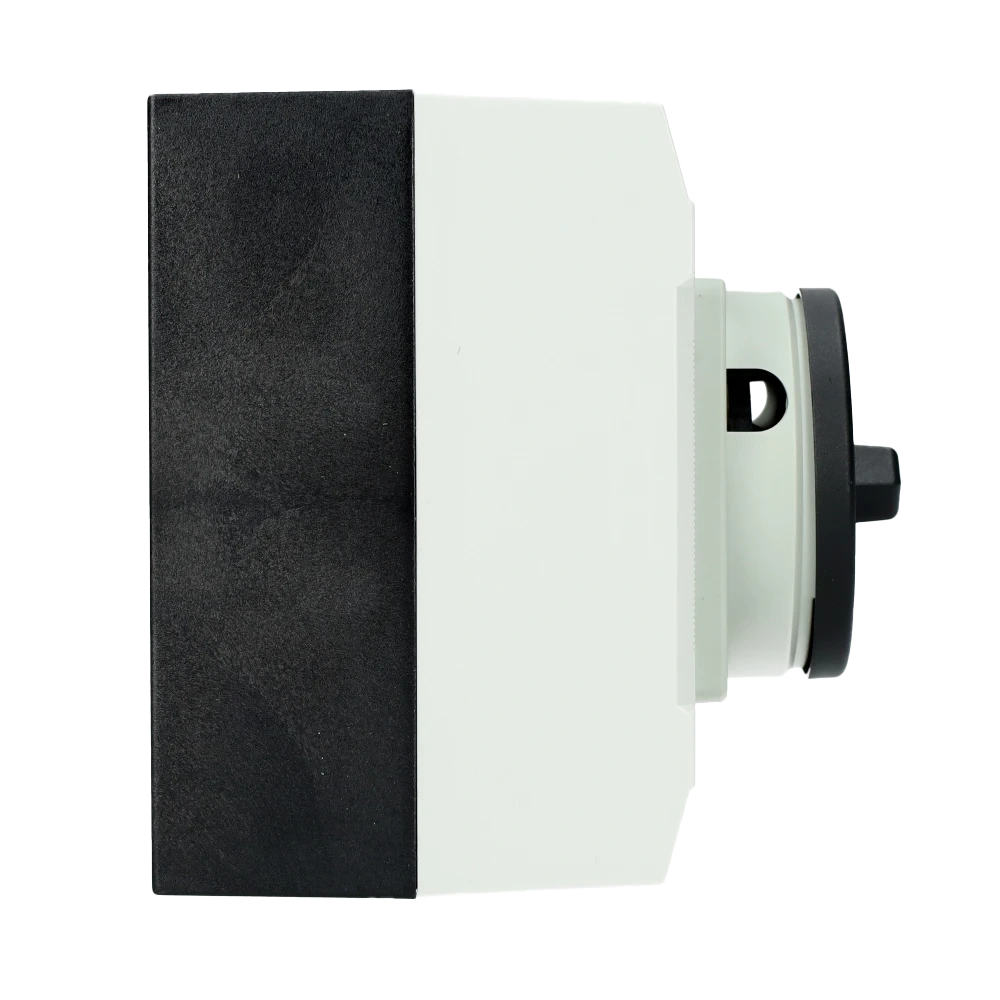
85013002 - EMAT - Maintenance switch black (2P 25A)
Item no. 158525EAN 8718924267868
Price excl. VAT€ 16,30Price incl. VAT€ 17,94
Low stock
Added
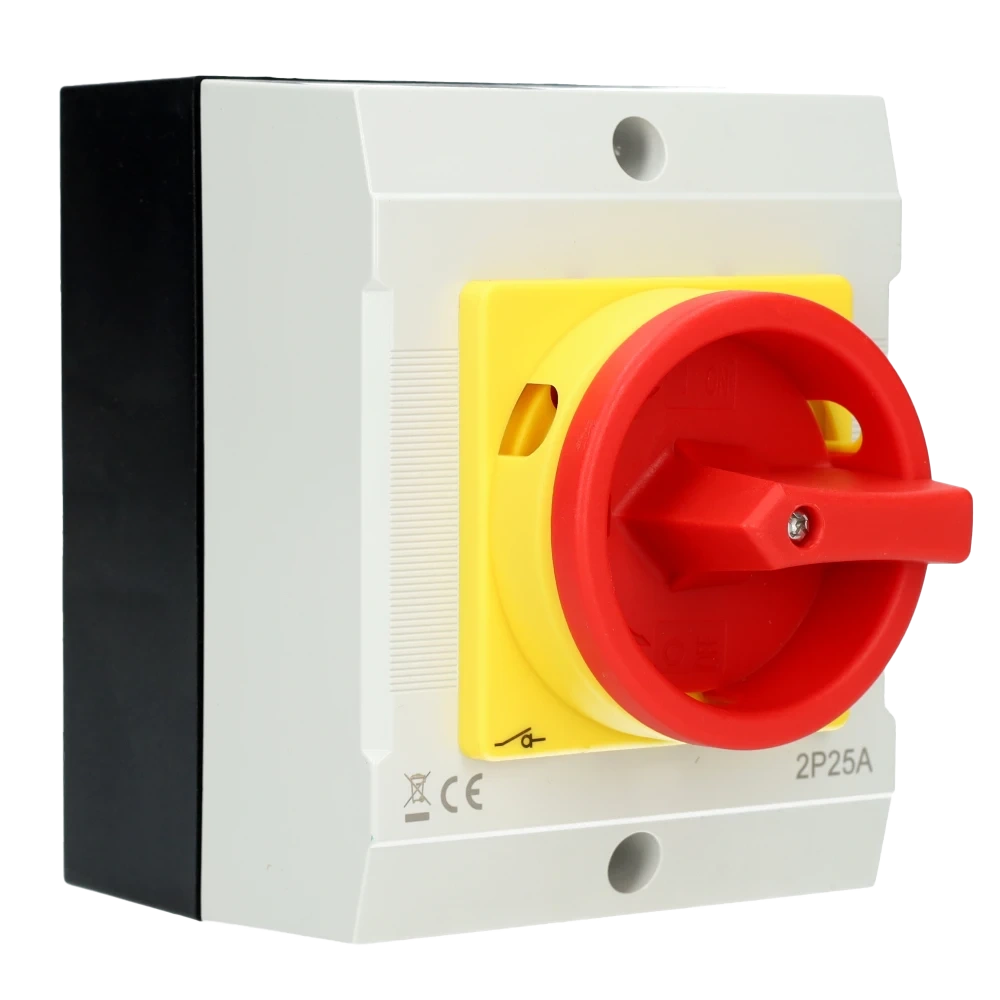
85013000 - EMAT - Isolator switch red (2P 25A)
Item no. 158522EAN 8718924267707
Price excl. VAT€ 16,30Price incl. VAT€ 19,72
Low stock
Added
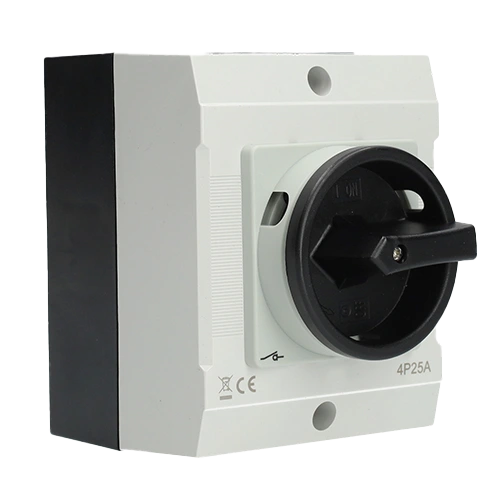
85013003 - EMAT - Isolator Switch Black (4P 25A)
Item no. 158542EAN 8718924267875
Price excl. VAT€ 18,10Price incl. VAT€ 19,95
On backorder
Added
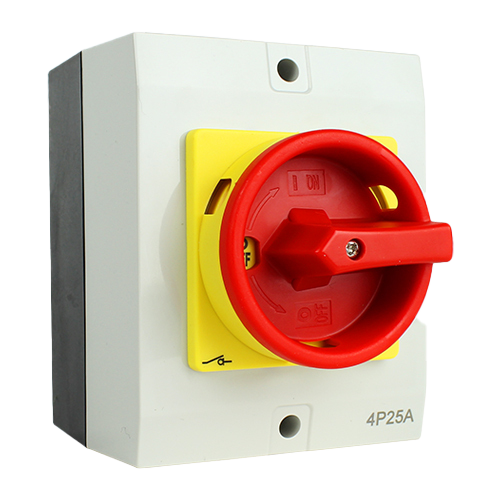
85013001 - EMAT - Isolator Switch Red (4P 25A)
Item no. 158545EAN 8718924267714
Price excl. VAT€ 18,10Price incl. VAT€ 21,90
In stock
Added
Isolator switches for safe electrical disconnection
Isolator switches are used to safely disconnect electrical installations, machines and technical components. They are important for maintenance, service work, fault diagnosis and situations where an installation must be locally and clearly isolated.
The correct isolator switch is selected based on number of poles, rated current, voltage, protection rating, mounting location and application. For installers, the combination with cabling, cable entry, glands and connected equipment is especially important.
For maintenance and service
An isolator switch allows a device or installation to be locally switched off before maintenance or service work is carried out. This creates a clear and safe working situation around electrical components.
2-pole and 4-pole versions
Depending on the installation, a 2-pole or 4-pole isolator switch may be required. The correct version depends on phase connection, switching method, load and the technical requirements of the connected equipment.
For technical installations
Isolator switches are widely used with heat pumps, air conditioning systems, machines, pumps, fans and other technical systems where safe disconnection is required.
Important points when choosing isolator switches
- Check the number of poles and choose a version that matches the electrical connection.
- Match the rated current, voltage and load to the connected device or installation.
- Pay attention to protection rating, mounting position, indoor or outdoor use and accessibility.
- Use suitable glands, cable entries and strain relief for safe cable routing.
- Have connection, inspection and commissioning carried out by a skilled technician.
Applications for isolator switches in installations
Isolator switches are used at electrical connections where maintenance must be carried out safely and clearly. This includes heat pumps, air conditioning systems, fans, pumps, machines and technical installations in homes, workshops and commercial buildings. For the connection, power cables, junction boxes and safety plugs are often relevant additional components.
For project-based mounting, isolator switches can also be combined with products from electrical, installation material and air conditioning installation material. This keeps cable routing, operation, disconnection and serviceability technically well aligned.
Heat pumps and air conditioning
Suitable for installations where an outdoor unit, technical component or supply line must be safely disconnected from power.
Workshops and machines
Practical for machines, pumps and technical equipment where local disconnection is important for maintenance and safety.
Service and renovation
Suitable when replacing, extending or improving existing electrical installations with better service accessibility.
Technical points for mounting and connection
With isolator switches, correct cable entry, core assignment, earthing, strain relief, switch position, protection rating and mechanical fixing are important. Incorrect connection or an undersized version can lead to heat build-up, faults, poor switching behaviour or unsafe situations.
Always check whether the isolator switch is suitable for the application, voltage, current rating, mounting position and environment. Electrical work must be carried out safely and according to applicable regulations. Fixed installations should be connected, modified and checked by a skilled technician.
Frequently asked questions about isolator switches
What is an isolator switch used for?
An isolator switch is used to locally disconnect an electrical device or installation from power before maintenance, service or inspection.
Which isolator switch do I need?
That depends on the number of poles, voltage, current rating, load, mounting environment and the technical requirements of the connected installation.
What is the difference between a 2-pole and 4-pole isolator switch?
A 2-pole isolator switch is often used for simpler connections. A 4-pole version is suitable for installations where multiple conductors or phases must be safely interrupted.
Are isolator switches often used with heat pumps or air conditioning systems?
Yes, many technical installations use an isolator switch to safely switch off the outdoor unit or device during maintenance.
Can I connect an isolator switch myself?
Electrical connections must be carried out safely and according to applicable regulations. Fixed connections and modifications should be performed or checked by a skilled technician.
Need isolator switches for your installation?
Are you looking for isolator switches for electrical work, heat pumps, air conditioning systems, machines or technical installations? Contact Hewa for advice on poles, current rating, cable entry, application and matching electrical components.