Filters
 Loading…
Multilayer pipe
Multilayer pipe is used for flexible pipe routes in heating systems, sanitary installations and water-based systems. Thanks to the combination of plastic layers and an aluminium core, the pipe is easy to bend, dimensionally stable and suitable for neat installation with matching press fittings.
At Hewa, you will find aluminium press multilayer pipe in various diameters, versions and insulation colours. When selecting the right pipe, check pipe size, wall thickness, insulation thickness, length, bending radius, press system, application, pressure class, temperature range and compatibility with the selected pipe system.
Brands

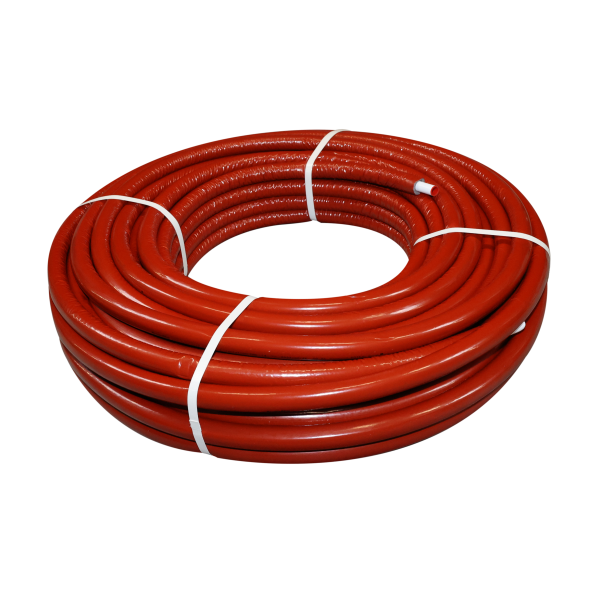
BONFIX 2003205 - Alu multilayer pipe + 6 mm insulation red (16 x 2 mm, 5 m)
Item no. 113216EAN 8717845564131
Price excl. VAT€ 12,20Price incl. VAT€ 14,76
In stock
Added

BONFIX 2003320 – Aluminium multilayer press pipe 32 x 3 mm with 6 mm insulation Blue (25 meter coil)
Item no. 113336EAN 8717845554118
Price excl. VAT€ 262,30Price incl. VAT€ 276,00
Low stock
Added

BONFIX 2003220 - Aluminium multilayer press pipe 32 x 3 mm with 6 mm insulation Red (25 meter coil)
Item no. 113236EAN 8717845456115
Price excl. VAT€ 262,30Price incl. VAT€ 276,00
Low stock
Added

BONFIX 2003220 – Aluminium multilayer press pipe 32 x 3 mm with 6 mm insulation Red (5 meters)
Item no. 113335EAN 8717845456115
Price excl. VAT€ 69,00Price incl. VAT€ 83,49
In stock
Added

BONFIX 2003215 - Aluminium multilayer press pipe 26 x 3 mm with 6 mm insulation Red (50 meter coil)
Item no. 113266EAN 8717845987640
Price excl. VAT€ 273,70Price incl. VAT€ 331,18
Low stock
Added

BONFIX 2003215 – Aluminium multilayer press pipe 26 x 3 mm with 6 mm insulation Red (5 meters)
Item no. 113265EAN 8717845987640
Price excl. VAT€ 34,50Price incl. VAT€ 41,75
In stock
Added

BONFIX 2003315 – Aluminium multilayer press pipe 26 x 3 mm with 6 mm insulation Blue (50 meter coil)
Item no. 113366EAN 8717845864514
Price excl. VAT€ 273,70Price incl. VAT€ 331,18
Low stock
Added

BONFIX 2003315 – Alu multilayer press pipe 26 x 3 mm with 6 mm insulation Blue (5 meters)
Item no. 113326EAN 8717845864514
Price excl. VAT€ 34,50Price incl. VAT€ 41,75
In stock
Added
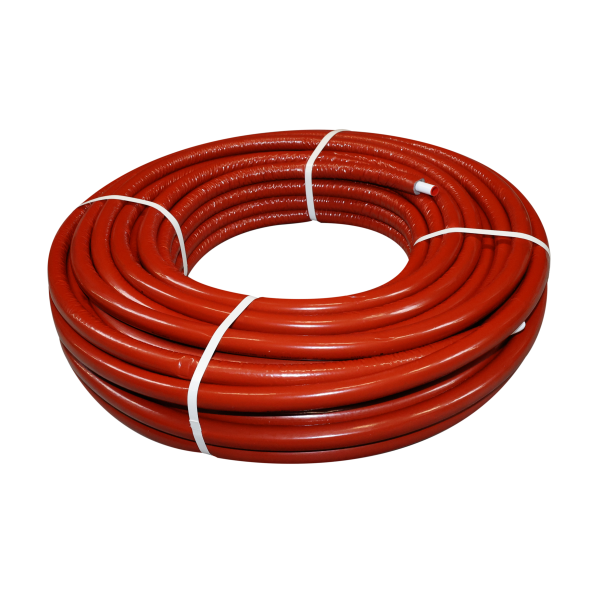
BONFIX 2003210 - Alu-Press Multilayer Pipe 20 x 2 mm 6 mm Insulation Red 50 Meter Coil
Item no. 113226EAN 8717845123451
Price excl. VAT€ 146,40Price incl. VAT€ 154,00
Low stock
Added

BONFIX 2003210 - Alu-Press Multilayer Pipe 20 x 2 mm 6 mm Insulation Red 5 Meter
Item no. 113221EAN 8717845123451
Price excl. VAT€ 19,30Price incl. VAT€ 23,35
Low stock
Added

BONFIX 2003310 - Alu-Press Multilayer Pipe 20 x 2 mm 6 mm Insulation Blue 50 Meter Coil
Item no. 113325EAN 8717845983215
Price excl. VAT€ 146,40Price incl. VAT€ 154,00
Low stock
Added

BONFIX 2003305 - Alu-Press Multilayer Pipe 16 x 2 mm 6 mm Insulation Blue 50 Meter Coil
Item no. 113356EAN 8717845945657
Price excl. VAT€ 110,30Price incl. VAT€ 116,00
Low stock
Added

BONFIX 2003305 - Alu-Press Multilayer Pipe 16 x 2 mm 6 mm Insulation Blue 5 Meter Coil
Item no. 113316EAN 8717845945657
Price excl. VAT€ 14,70Price incl. VAT€ 17,79
In stock
Added
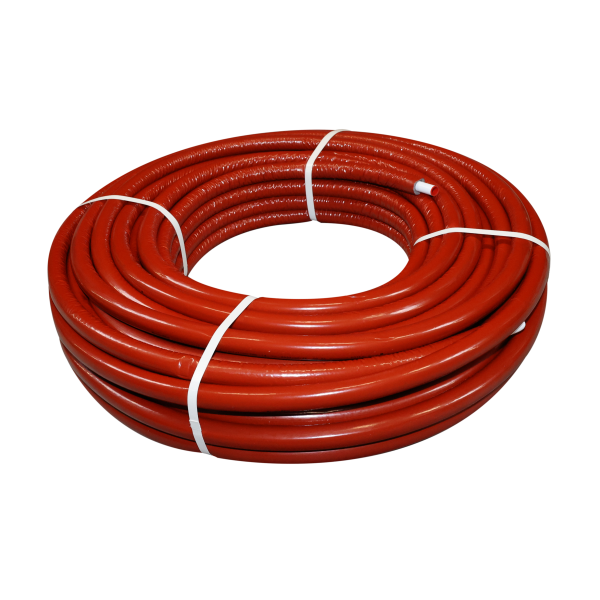
BONFIX 2003205 - Alu-Press Multilayer Pipe 16 x 2 mm 6 mm Insulation 50 Meter Coil
Item no. 113256EAN 8717845123451
Price excl. VAT€ 146,40Price incl. VAT€ 154,00
Low stock
Added

BONFIX 2003320 – Aluminium multilayer press pipe 32 x 3 mm with 6 mm insulation Blue (5 meters)
Item no. 113235EAN 8717845554118
Price excl. VAT€ 69,00Price incl. VAT€ 83,49
In stock
Added
Selecting multilayer pipe
Multilayer pipe is suitable for flexible pipe routes in heating systems, sanitary installations and water-based systems. The pipe consists of multiple layers, often with an aluminium core between plastic layers. This allows multilayer pipe to combine flexibility with dimensional stability, making longer pipe routes practical to install without needing a fitting at every change of direction.
The right choice depends on diameter, wall thickness, insulation, length, colour coding, press system, application and mounting environment. For the broader pipe category, also review pipes for technical installations. For dimensionally stable pipework, copper pipe may be relevant. For additional protection against heat loss or condensation, pipe insulation is important.
Important when choosing multilayer pipe
- Check the correct pipe size, such as 16 x 2 mm, 20 x 2 mm, 26 x 3 mm or 32 x 3 mm
- Match diameter and wall thickness to flow rate, pressure loss and application
- Check insulation thickness, pipe colour and use for flow or return pipework
- Select press fittings that match the pipe, press profile and system
- Allow for minimum bending radius, pipe route and fixing distance
- Prevent kinks, damage to the outer layer and strain on fittings
- Always check the technical requirements of the pipe, fitting and installation
Flexible pipework with aluminium press multilayer pipe
An important advantage of multilayer pipe is flexible handling. The pipe can be routed over longer distances and is easier to shape than rigid pipe materials. This makes multilayer pipe practical for renovation, manifolds, heating pipes, sanitary connections and installations where pipes run through walls, floors, technical rooms or limited mounting spaces.
With aluminium press multilayer pipe, the combination with the correct press fitting is decisive for reliable installation. The pipe must be cut square, calibrated, deburred and inserted into the fitting to the correct insertion depth. The fitting must then be pressed using the correct press profile and suitable press tools. Incorrect preparation or the wrong press jaw can cause leakage, insufficient clamping or pipe damage.
For installers, it is sensible to determine the pipe route carefully in advance. Check bends, fixing points, insulation, colour coding, accessibility, penetrations, expansion and strain-free installation. With insulated multilayer pipe, the insulation jacket helps reduce heat loss and provides a cleaner pipe finish. Always check whether diameter, insulation, fitting and application match the installation design.
Frequently asked questions about multilayer pipe
What is multilayer pipe used for?
Multilayer pipe is used for flexible pipe routes in heating systems, sanitary installations and water-based systems. The pipe is suitable for applications where flexibility, dimensional stability and fast installation are important.
Which multilayer pipe size do I need?
The correct size depends on application, flow rate, pipe length, pressure loss, fitting type and system layout. Common sizes include 16 x 2 mm, 20 x 2 mm, 26 x 3 mm and 32 x 3 mm.
Which fittings are suitable for multilayer pipe?
Multilayer pipe is often combined with matching press fittings. Always check whether pipe size, press profile, fitting, press tools and application are technically compatible.
Why is insulated multilayer pipe useful?
Insulated multilayer pipe helps reduce heat loss, protects the pipe and provides a neater installation. The correct insulation thickness depends on temperature, environment, application and installation requirements.
What should an installer check during installation?
Check square cutting, calibration, deburring, correct insertion depth, matching press profile, minimum bending radius, strain-free installation, fixing, insulation and leak tightness.