Installation Industry Developments 2026: Trends, Data and Opportunities
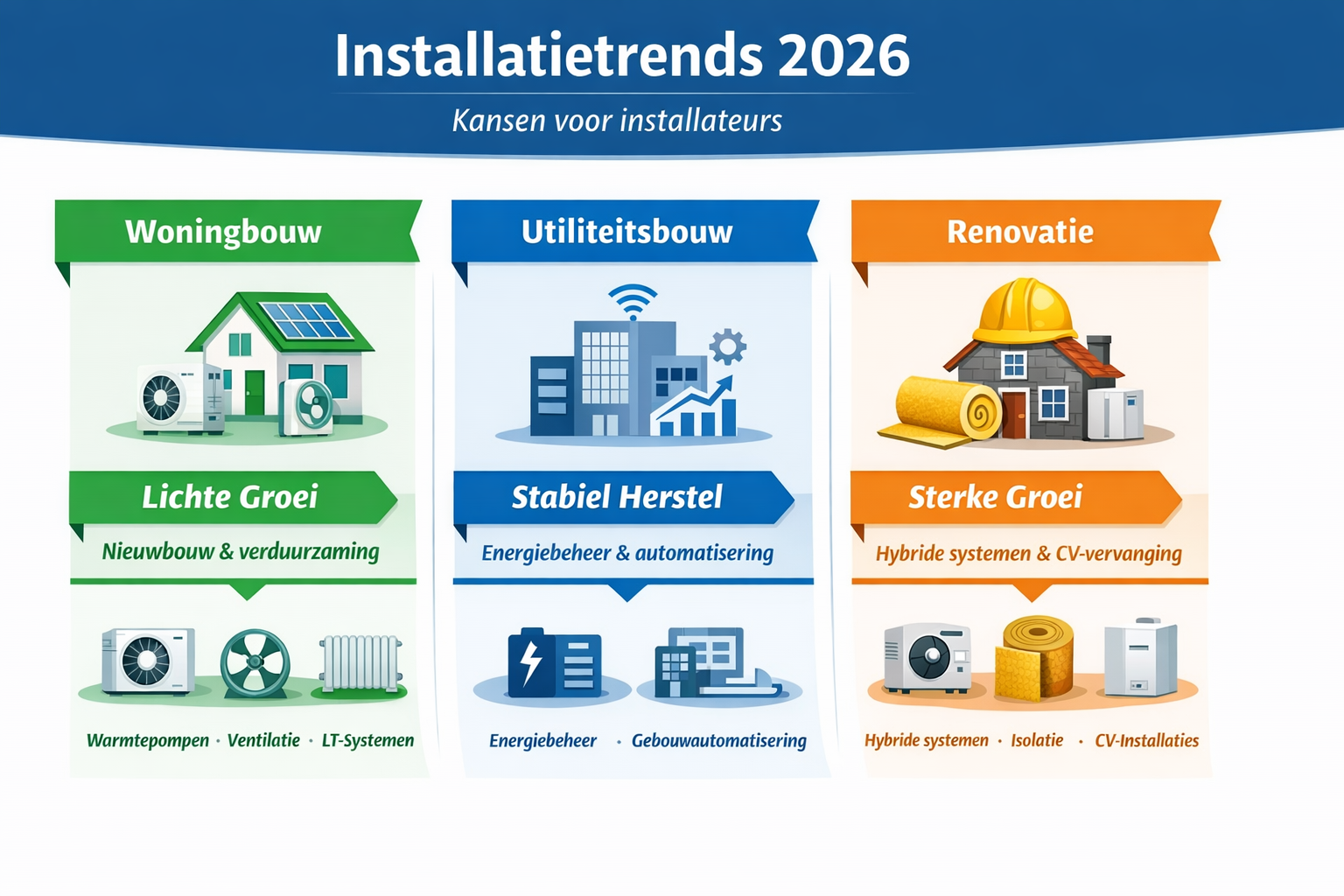
The installation industry will remain a key driver in the construction and energy transition in 2026. Demand for sustainable installations, renovation projects and energy-efficient buildings continues to grow. At the same time, the sector is rapidly evolving due to digitalisation, stricter regulations and new technologies such as heat pumps, energy management systems and building automation.
For installation companies, this means there are many opportunities, but also that specialisation and efficiency are becoming increasingly important. In this article we discuss the most important developments in the installation industry for 2026 and the years ahead.
Growth in renovation and sustainability
The largest demand in the installation industry currently comes from renovation and energy upgrades of existing buildings. Many residential and commercial buildings are being adapted to become more energy efficient and less dependent on fossil fuels.
Installations such as air-to-water heat pumps, ventilation systems, buffer tanks and energy storage systems are playing an increasingly important role. As a result, the share of installation technology in construction projects continues to grow.
Labour market remains the biggest challenge
The shortage of technical personnel remains one of the biggest challenges in the sector. Due to an ageing workforce and increasing demand for installation technology, pressure on installation companies continues to grow.
Many companies are therefore investing in automation, prefabrication solutions and digitalisation to work more efficiently. Collaboration within the supply chain is also becoming increasingly important.
Digitalisation and smart buildings
Building automation and data-driven installations are becoming increasingly important. Modern buildings integrate multiple systems for heating, cooling, ventilation, lighting and energy management.
From 2026 onwards, stricter European regulations will also apply to large buildings with HVAC installations. Buildings with installations above 290 kW must implement a Building Automation and Control System (BACS / GACS). These systems monitor energy usage and optimise building installations automatically.
New technologies and specialisations
Installers are increasingly working with integrated installation systems where multiple technologies operate together. Examples include combinations of heat pumps, solar panels, battery storage systems and smart energy management.
Important knowledge areas for installers in the coming years:
- Heat pump technology and low-temperature heating
- Building automation (BMS / BACS)
- Energy storage and energy management systems
- IoT and data monitoring
- Cybersecurity for building installations
Prefab installations and industrialisation
Prefabrication and modular construction are rapidly gaining importance in the installation sector. Installations are increasingly assembled in factories and then installed on site. This reduces construction time and minimises failure costs.
For installers, this means becoming involved earlier in the design process and working more closely with contractors and suppliers.
Subsidies and regulations remain important
Subsidy programmes remain an important driver for sustainable installations. At the same time, subsidy requirements regularly change, particularly regarding heat pumps and ventilation systems.
Installers therefore need to stay up to date with the latest regulations and inform customers about available financial incentives.
What does this mean for installation companies?
The installation industry will continue to grow, but it will also become more technical and complex. Companies that invest in knowledge, digitalisation and collaboration can benefit from these developments.
- Invest in knowledge of sustainable installations
- Use prefab systems to install more efficiently
- Expand expertise in building automation and energy management
- Collaborate with specialised partners
Support from Hewa
At Hewa we support installers with a wide range of installation materials and sustainable heating solutions. This includes products such as buffer tanks, heat pumps, connection materials and climate technology solutions.
By working closely with installation companies and technical professionals we help projects run more efficiently and ensure installations perform optimally.
Conclusion
The installation industry will continue to grow and innovate in 2026. Sustainability, digitalisation and new regulations are transforming the sector, while also creating significant opportunities for installation companies that continue to develop.
Frequently asked questions about the installation industry in 2026
Will the installation industry continue to grow?
Yes, demand for installation technology continues to increase due to sustainability goals, renovation projects and stricter energy requirements for buildings.
Which installations are most in demand?
Heat pumps, ventilation systems, energy storage and building automation are among the fastest growing installation technologies.
Which skills will become more important for installers?
Knowledge of heat pumps, control technology, energy management systems and digital building installations will become increasingly important.