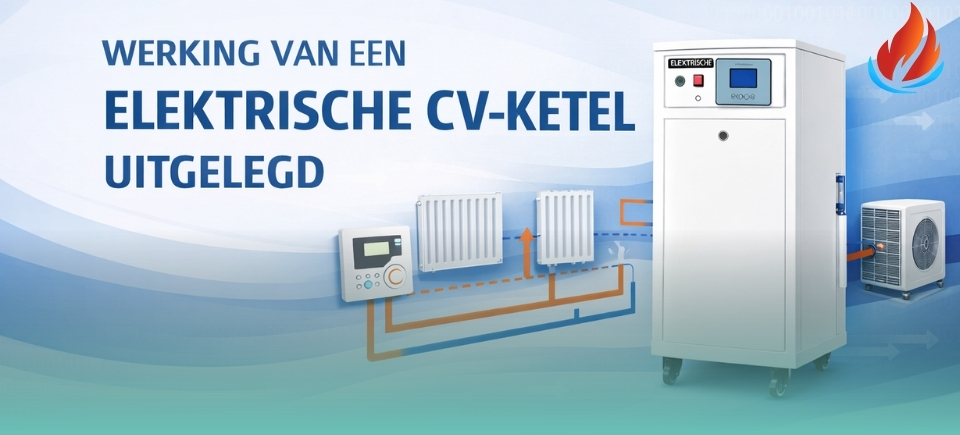
How an electric boiler works explained
Electric boilers, often referred to as e-boilers, heat the central heating water directly using electrical heating elements. Unlike traditional gas boilers, no combustion process takes place. As a result, no flue gas system is required and the unit can be installed in a relatively compact space.
This technology is increasingly used in modern heating systems. Electric boilers are applied as auxiliary heating, as a backup for heat pumps, or as a temporary heating solution during renovation projects. For residential buildings, outputs typically range from 6 to 24 kW, while commercial installations can reach up to 240 kW.
How does an electric boiler work?
The operation of an electric boiler is relatively straightforward. Electrical energy is converted into heat through resistance heating elements. These elements heat the water which then circulates through the central heating system.
The system controller determines how much output is required. Modern electric boilers modulate in power steps, allowing the system to respond accurately to the current heating demand.
For example:
- 6 kW boiler → 3 heating elements of 2 kW
- 24 kW boiler → multiple elements switched on step by step
This allows the output to automatically adjust when the heat demand changes.
Components of an electric boiler
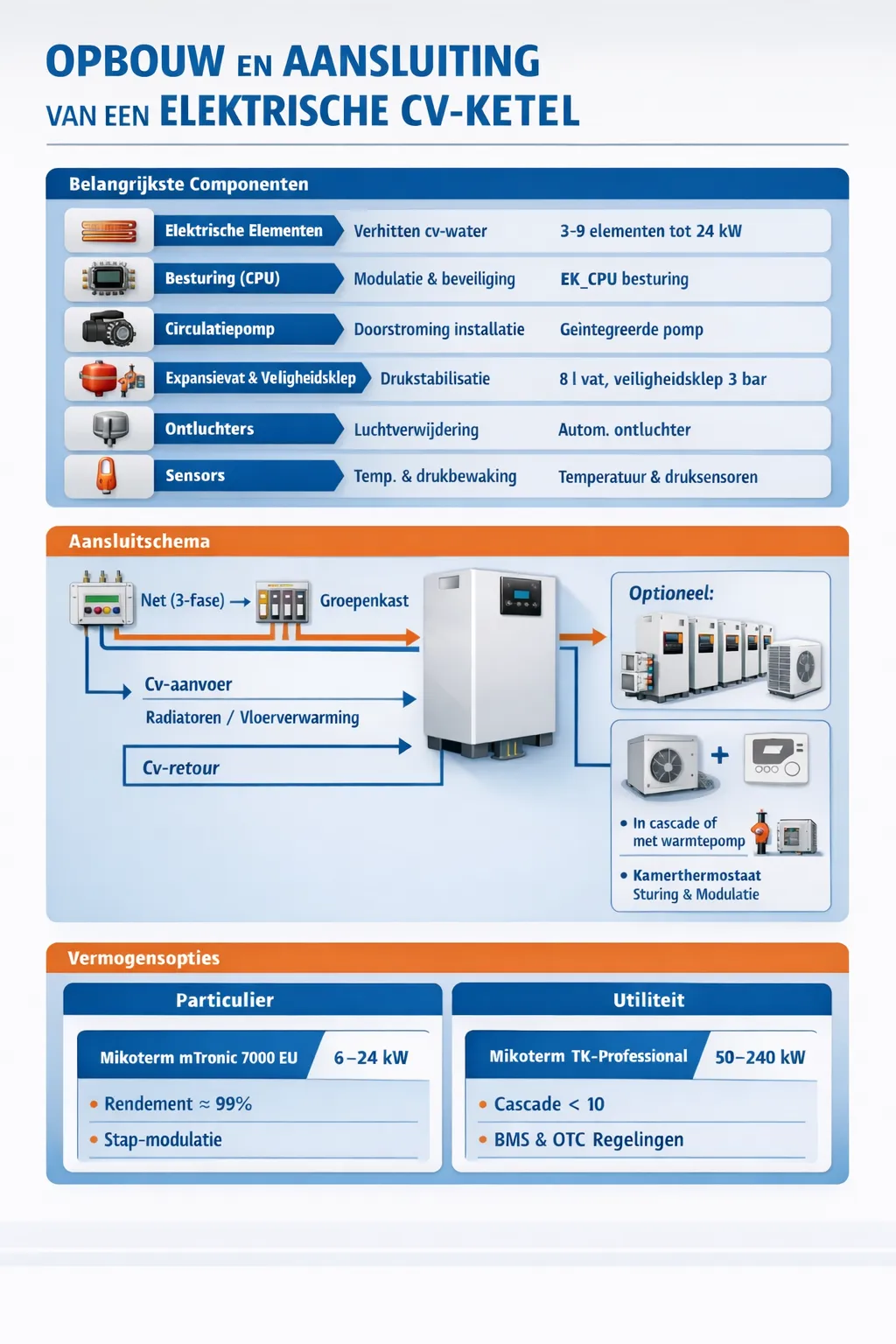
A modern electric boiler consists of several integrated components that ensure safe and efficient operation. Many compact residential electric boilers already include these components within the unit.
Difference between an electric boiler and a gas boiler
Although both systems perform the same task – heating water for the central heating system – their technology differs significantly. Because no combustion takes place, electric boilers are easier to install and generally require less maintenance.
Connecting an electric boiler
An electric boiler is connected to the building’s electrical installation and to the existing central heating system.
For higher outputs, a three-phase electrical connection is usually required. Depending on the capacity, this may be for example:
- 6 kW → 3×16 A
- 12 kW → 3×20 A
- 24 kW → 3×35–40 A
The boiler is then hydraulically connected to radiators, underfloor heating or a buffer tank.
Applications of electric boilers
Electric boilers are used in a variety of heating system applications.
- Backup heating for heat pumps
- Additional heating for specific zones
- Temporary heating during renovation
- All-electric homes with lower heat demand
- Commercial systems with higher output
In larger installations, electric boilers are often used as peak load sources or as an additional heat generator alongside a heat pump.
Output range for residential and commercial buildings
Larger systems can often be connected in cascade, allowing multiple boilers to operate together to provide a higher total output.
Advantages of electric boilers
- No flue gas system required
- Compact installation
- Fast installation
- Accurate power control
- Ideal as backup for heat pumps
Important considerations
Although electric boilers are technically very efficient, there are several important considerations when applying them.
- Sufficient electrical connection capacity is required
- Energy costs depend on electricity prices
- Proper hydraulic balancing remains essential
Electric boilers combined with heat pumps
In modern heating systems, an electric boiler is often combined with an air-to-water heat pump. In this configuration, the electric boiler acts as a peak load source when the heating demand temporarily exceeds the capacity of the heat pump.
This so-called bivalent system ensures a stable and reliable heating installation.
Advice on electric boilers
The right choice of an electric boiler depends on several factors, such as the building’s heat demand, the available electrical connection capacity and the type of heating system installed.
At Hewa, we support installers and project developers with technical documentation, project advice and the supply of electric boilers for both residential and commercial installations.