The end of the Dutch net metering scheme in 2027: what does it mean?
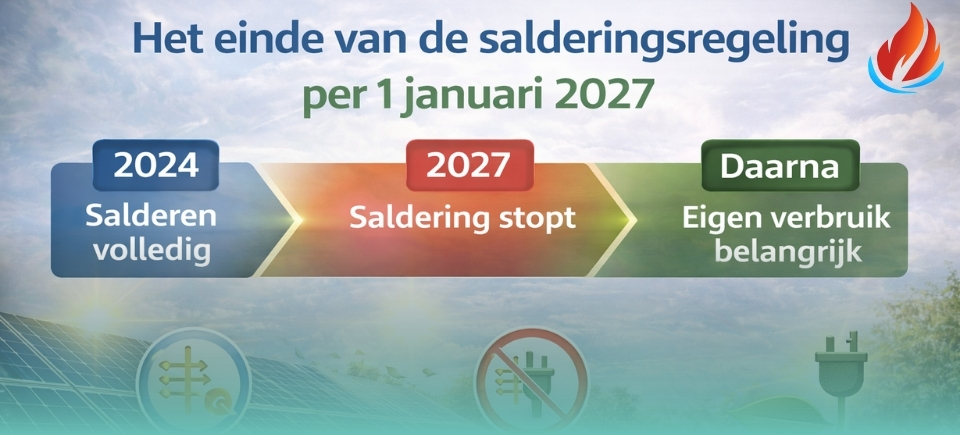
The Dutch net metering scheme ends on January 1, 2027
The Dutch government has decided to completely abolish the net metering scheme for solar panels starting January 1, 2027. This scheme allowed homeowners with solar panels to offset the electricity they generated and exported to the grid against the electricity they consumed at other times.
For many households this scheme was a major incentive to invest in solar panels. Excess electricity produced during the day could be financially offset against electricity consumed later.
With the removal of this scheme, the financial model behind solar energy is expected to change.
What is the net metering scheme?
The net metering scheme allows electricity generated by solar panels and exported to the grid to be deducted from the electricity consumed from the grid.
In practice this meant that a household could generate electricity during sunny hours and use that value later in the evening or during winter months.
This significantly reduced energy costs for solar panel owners.
Why is the scheme being discontinued?
One of the main reasons for ending the scheme is the increasing pressure on the electricity grid. During sunny days large amounts of solar energy are fed back into the grid.
In some regions this creates congestion because the grid was not originally designed to handle such large volumes of decentralized energy production.
The government therefore wants to encourage households to use more of their self-generated electricity directly.
What changes after 2027?
After 2027 it will still be possible to export electricity to the grid, but the compensation for exported energy will be significantly lower than the price paid for electricity from the grid.
This means that exporting electricity will become less financially attractive.
As a result, households are increasingly looking for ways to consume more of their own solar energy directly.
Self-consumption becomes more important
With the end of net metering, the focus shifts towards using electricity within the household itself.
Solar electricity generated during the day can be used for household appliances, electric installations or other energy-consuming systems.
Technologies such as heat pumps can also help increase the use of self-generated electricity.
New developments in energy management
Energy systems are becoming increasingly intelligent. Modern installations can automatically use electricity when solar production is high.
Additionally, technologies such as SG Ready allow systems to communicate with smart grids and energy management systems.
This helps balance electricity demand and supply more efficiently.
What does this mean for existing solar panels?
Even without net metering, solar panels remain an important source of renewable energy.
The cost of solar technology has decreased significantly in recent years, while efficiency has improved.
However, optimizing the direct use of solar electricity within the building will become increasingly important.